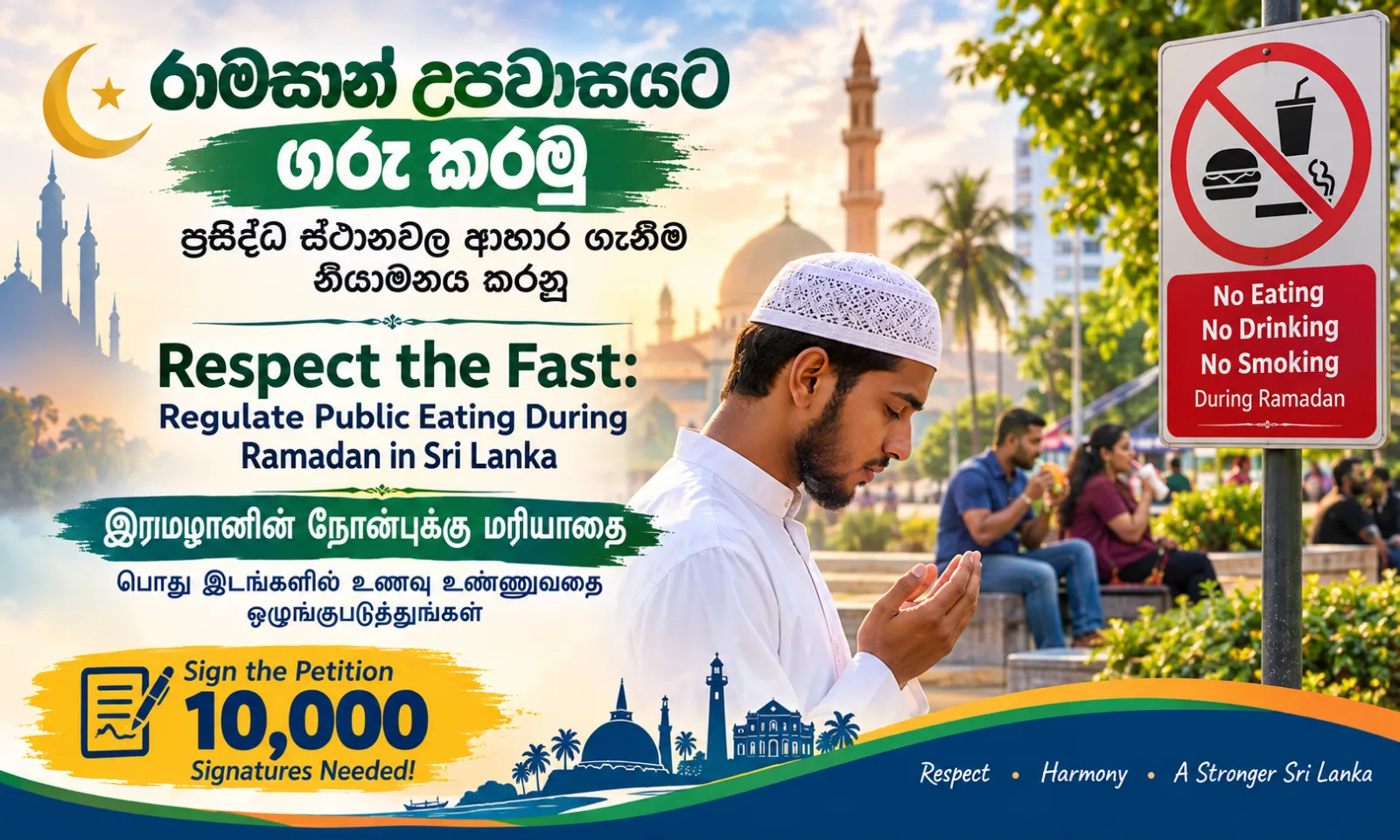
Sri Lanka is a multi-religious and multi-cultural nation where diverse communities coexist with mutual respect. The Muslim community, which comprises a significant percentage of the Sri Lankan population, observes the holy month of Ramadan annually. During this 30-day period, they devoutly fast from dawn to dusk, which is one of the core and mandatory pillars of their faith.
However, during the fasting period of Ramadan, the public consumption of food, beverages, and smoking in public transport, government and private institutions, and open public spaces causes significant inconvenience to those fasting and deeply hurts their religious sentiments. Given that Sri Lanka is home to a substantial Muslim population, respecting their religious observances and ensuring their spiritual peace is vital for maintaining social harmony.
Many Islamic and multi-cultural nations worldwide legally protect these religious values and the rights of fasting individuals. For instance:
- Gulf Cooperation Council (GCC) Countries: In countries like Saudi Arabia, the United Arab Emirates (UAE), Qatar, Kuwait, Oman, and Bahrain, eating, drinking, or smoking in public during daylight hours in Ramadan is strictly prohibited by law.
- Pakistan: Under the 'Respect for Ramadan Act', consuming food in public during fasting hours is illegal and punishable by up to three months of imprisonment.
- Iran and Brunei: Strict legal frameworks and penal codes are enforced to prohibit public consumption during daylight hours to uphold the sanctity of the holy month.
- Malaysia and Jordan: These nations utilize moral policing and public regulations to prevent actions that could disrespect or disrupt the observations of fasting individuals.
These international precedents demonstrate that state intervention and legal frameworks are essential to uphold religious decorum and respect the sentiments of a significant segment of society.
ශ්රී ලංකාව යනු විවිධ ආගම් හා සංස්කෘතීන් ගරු කරමින් එකිනෙකා අතර සහජීවනයෙන් ජීවත්වන බහු-ආගමික රටකි. ශ්රී ලාංකීය ජනගහනයෙන් සැලකිය යුතු ප්රතිශතයක් නියෝජනය කරන මුස්ලිම් ප්රජාව, වසරක් පාසා උදාවන පූජනීය රාමසාන් මාසයේදී දින 30 ක කාලයක් අළුයම සිට සන්ධ්යාව දක්වා ඉතා භක්තිමත් ලෙස උපවාසයේ නිරත වෙති. මෙය ඔවුන්ගේ ආගමික වතාවත් අතර ඇති ප්රධානතම සහ අනිවාර්ය වගකීමකි.
කෙසේ වෙතත්, රාමසාන් උපවාස කාලසීමාව තුළ පොදු ප්රවාහන සේවා, රාජ්ය හා පෞද්ගලික ආයතන මෙන්ම විවෘත පොදු ස්ථානවල අනෙකුත් පිරිස් ප්රසිද්ධියේ ආහාර පාන ගැනීම සහ දුම්පානය කිරීම හේතුවෙන් උපවාසයේ යෙදෙන ඉස්ලාම් භක්තිකයන් දැඩි අපහසුතාවයට පත්වන අතර, එය ඔවුන්ගේ ආගමික හැඟීම්වලට සහ සිත් රිදවීම්වලට හේතු වේ. ශ්රී ලංකාව තුළ වර්තමානය වන විට අතිවිශාල මුස්ලිම් ජනගහනයක් ජීවත් වන බැවින්, ඔවුන්ගේ මෙම ආගමික වතාවත්වලට ගරු කිරීම සහ සුරක්ෂිතභාවය සැලසීම සමාජ සහජීවනය උදෙසා අත්යවශ්ය කරුණකි.
ලෝකයේ බොහෝ ඉස්ලාමීය සහ බහු-සංස්කෘතික රටවල් මෙම ආගමික වටිනාකම් සහ උපවාසයේ යෙදෙන්නන්ගේ අයිතිවාසිකම් නීතියෙන් ආරක්ෂා කර ඇත. උදාහරණයක් ලෙස:
- සෞදි අරාබිය, එක්සත් අරාබි එමීර් රාජ්යය (UAE), කටාර්, කුවේට්, ඕමානය සහ බහරේනය වැනි ගල්ෆ් කලාපීය රටවල රාමසාන් මාසයේ දිවා කාලයේ ප්රසිද්ධියේ ආහාර ගැනීම, බීම හෝ දුම්පානය නීතියෙන් සපුරා තහනම්ය.
- පාකිස්ථානය තුළ 'Respect for Ramadan Act' (රාමසාන් ගරුත්ව පනත) මඟින්ද, බෲනායි සහ ඉරානය වැනි රටවල ශරියා සහ දණ්ඩ නීති මඟින්ද මෙය වරදක් ලෙස සලකා දඬුවම් පමුණුවනු ලබයි.
- මලයාසියාව සහ ජෝර්දානය වැනි රටවලද උපවාස කාලසීමාවේදී මහජන හැසිරීම් සහ සදාචාරාත්මක නීති මඟින් උපවාසකරුවන්ගේ සිත් රිදවීම් වැළැක්වීමට පියවර ගෙන ඇත.
මෙම ජාත්යන්තර උදාහරණ පෙන්වා දෙන්නේ ආගමික සදාචාරය සහ බහුතරයකගේ හැඟීම්වලට ගරු කිරීම වෙනුවෙන් රාජ්ය මැදිහත්වීම සහ නීතිමය නියාමනයන් අත්යවශ්ය බවයි.
Signatures & comments (0)